Heroism Defined

Heroism Defined

Heroism defined: remarkable physical or moral courage.

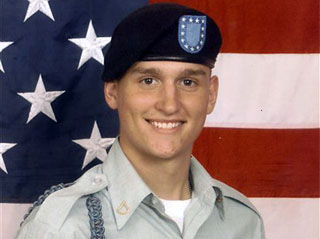
Pa. Soldier Who Jumped on Grenade to Receive Posthumous Medal of Honor

Pfc. Ross McGinnis of Knox, Pa., who died saving the lives of his comrades in Iraq, will be awarded the Medal of Honor June 2

WASHINGTON — The White House announced Friday that a Pennsylvania soldier who jumped on top of a grenade in Iraq and saved the lives of his comrades will posthumously receive the Medal of Honor.

The nation’s highest military honor will be given to 19-year-old Army Pfc. Ross McGinnis of Knox, Pa., on June 2.

McGinnis “distinguished himself by extraordinary heroism,” said White House deputy press secretary Tony Fratto.

McGinnis was perched in the gunner’s hatch of a Humvee when a grenade sailed past him and into the truck where four other soldiers sat. He shouted a warning to the others, then jumped on the grenade. The grenade, which was lodged near the vehicle’s radio, blew up and killed him.

Lt. Col. Anne Edgecomb, an Army spokeswoman, said McGinnis easily could have jumped out of the truck and saved himself.

“The instinct is, jump out of the vehicle, but his four buddies were in the vehicle with him …. and he chose to place himself on top of the grenade and absorb the impact, and it saved their lives,” Edgecomb said.

McGinnis was assigned to the 1st Battalion, 26th Infantry Regiment, 2nd Brigade Combat Team, 1st Infantry Division, in Schweinfurt, Germany.

He died on Dec. 4, 2006.

Three others have also been awarded the Medal of Honor posthumously for their actions in Iraq. They are Army Sgt. 1st Class Paul R. Smith, Navy Petty Officer 2nd Class Michael A. Monsoor and Marine Cpl. Jason L. Dunham.

Santa Clara County firefighters Capt. Jason Falarski, left, and Eric Limones fight a wildfire as it approaches a home in the Santa Cruz Mountains west of Gilroy, California

Irene is my hero because she’s a person of great moral courage.  She has faced the enemy, the incurable Amyloidosis disease, with significant grace, joy, dignity, perseverance and courage.

She models to all of us how to face daunting circumstances and live the abundant and victorious life

Continue reading

Who Moved My Cheese?

Who Moved My Cheese?

An Amazing Way to Deal with CHANGE in your work and in your life, published in 1998, is a motivational book by Spencer Johnson written in the style of a parable. It uses four typical reactions to said change with two mice, two “little people”, and their hunts for cheese.

Irene has certainly faced colossal and catastrophic CHANGE over the last year.  Her dignified response to the radical “moving of her cheese” has been a model of patience and grace for all of us.

After driving herself to and from dialysis this Memorial Day Holiday, Irene came home fatigued and nauseated from treatment.  However, she plodded through the day and both of us rested and savored the slow-paced day ….

From Wikipedia ….

Allegorical, Who Moved My Cheese? features four characters; two mice, “Sniff” and “Scurry”, and two little people, miniature humans in essence, “Hem” and “Haw”, live in a maze, a representation of one’s environment, and look for cheese, representative of happiness and success. Initially without cheese, each group, the mice and humans paired off, travel the lengthy corridor searching for cheese. One day both groups happen upon a cheese-filled corridor in “Cheese Station C”. Content with their find, the humans establish routines around their daily intake of cheese slowly becoming arrogant in the process.

One day Sniff and Scurry arrive at Cheese Station C to find no cheese left but they are not surprised. Noticing the cheese supply dwindling, they have mentally prepared for the arduous, but inevitable task of finding more cheese beforehand. Leaving Cheese Station C behind, they begin their hunt for new cheese together. Later that day, Hem and Haw arrive at Cheese Station C only to find the same thing, no cheese. Angered and annoyed, Hem demands “who moved my cheese?”. Unprepared, the humans have counted on the cheese supply to be constant. After verifying that the cheese is indeed gone and ranting at the unfairness of the situation, both head home hungry. Returning the next day, Hem and Haw find the same cheeseless station. Beginning to realize the situation at hand, Haw proposes a search for new cheese,

Continue reading

Johns Hopkins Hospital Cancer Update

No one on the planet knows what causes Primary Amyloidosis.  However, there is wisdom in applying what I would call the “discipline of our decisions” to the degree that we’re able to positively influence our health and well being.  We hope that your find this recently released information helpful on your pilgrimage.

AFTER YEARS OF TELLING PEOPLE CHEMOTHERAPY IS THE ONLY WAY TO TRY AND ELIMINATE CANCER, JOHNS HOPKINS IS STARTING TO TELL YOU THERE IS AN ALTERNATIVE WAY. 

Cancer Update from Johns Hopkins Hospital

1. Every person has cancer cells in the body. These cancer cells do not show up in the standard tests until they have multiplied to a few billion. When doctors tell cancer patients that there are no more cancer cells in their bodies after treatment, it just means the tests are unable to detect the
cancer cells because they have not reached the detectable size.

2. Cancer cells occur between 6 to more than 10 times in a person’s lifetime.

3. When the person’s immune system is strong the cancer cells will be destroyed and prevented from multiplying and forming tumors.

4. When a person has cancer it indicates the person has multiple nutritional deficiencies. These could be due to genetic, environmental, food and lifestyle factors.

5. To overcome the multiple nutritional deficiencies, changing diet and including supplements will strengthen the immune system.

6. Chemotherapy involves poisoning the rapidly-growing cancer cells and also destroys rapidly-growing healthy cells in the bone marrow, gastro-intestinal tract etc, and can cause organ damage, like liver, kidneys, heart, lungs etc.

7. Radiation while destroying cancer cells also burns, scars and damages healthy cells, tissues and organs.

8. Initial treatment with chemotherapy and radiation will often reduce tumor size. However prolonged use of chemotherapy and radiation do not result in more tumor destruction.

9. When the body has too much toxic burden from chemotherapy and radiation the immune system is either compromised or destroyed, hence the person can succumb to various kinds of infections and complications.

10. Chemotherapy and radiation can cause cancer cells to mutate and become resistant and difficult to destroy. Surgery can also cause cancer cells to spread to other

Continue reading

Copyright 2015 IreneDias.com. All Rights Reserved.

Log in with your credentials

Forgot your details?